Noetix BUMI Standard Humanoid Robot
In stock
- BRAND:
- NOETIX
- PART #:
- BUMI
- ORIGIN:
- China
- AVAILABILITY:
- SUBJECT TO AVAILABILITY
- SKU:
- Noetix-BUMI
Noetix BUMI Standard Humanoid Robot
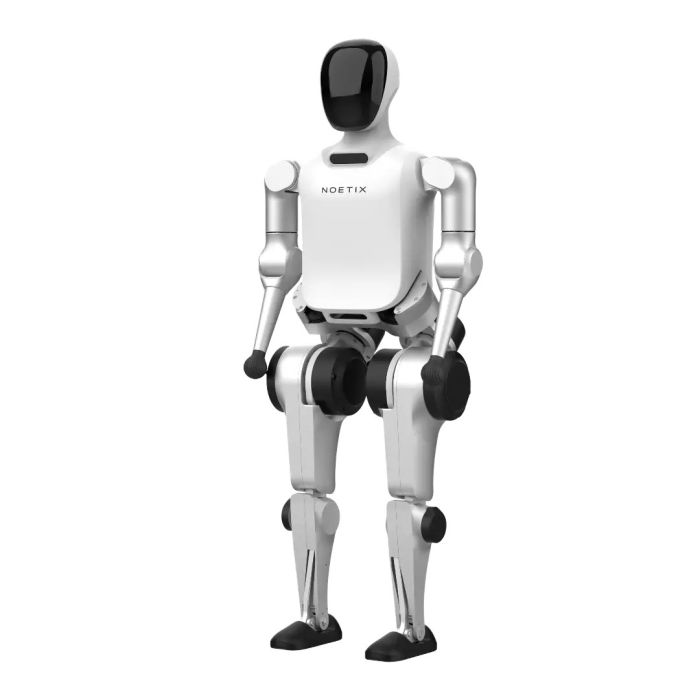
The Noetix BUMI Standard Humanoid Robot is a compact, consumer-oriented bipedal humanoid developed by Noetix Robotics, a Beijing-based startup founded in 2023. Announced in late 2025, Bumi stands about 94 cm tall, weighs approximately 12 kg, and is designed to walk on two legs, perform expressive motions such as dancing, and support open programming for learning and prototyping. Where most humanoid robots target industry or research labs, Bumi is aimed squarely at education, hobbyist development and home companionship — a genuinely accessible entry point into legged humanoid robotics. This page summarizes the platform's reported design, capabilities and procurement path.
Background
Bumi arrived at a moment when humanoid robotics was dominated by expensive, full-size industrial platforms. Its significance lies in bringing true bipedal locomotion down to a size and positioning that schools and households can realistically consider.
Noetix Robotics: a young company with consumer ambitions
Noetix Robotics was founded in Beijing in 2023 and moved quickly from formation to consumer product. Reports attribute Bumi's accessible positioning to domestic component sourcing, lightweight composite materials and manufacturing scale within China, alongside venture funding to accelerate productization: the company disclosed a pre-B financing round led by Vertex Ventures in October 2025, framing Bumi as a consumer milestone rather than a research prototype. Early market signals were notable, with reports of hundreds of presales and rapid sell-through in the first days after announcement — indicators of demand for an approachable humanoid, though early traction figures should be read as press-reported rather than audited.
A child-size design with deliberate trade-offs
Bumi's roughly one-meter, ~12 kg chassis is a deliberate engineering choice. The smaller scale reduces cost, transport difficulty and safety risk in classrooms and homes, while preserving the essential two-legged locomotion that separates humanoids from wheeled service robots. Launch materials and media demonstrations emphasize dynamic gestures and dance routines that showcase balance and whole-body coordination. Interaction is consumer-first: coverage highlights voice interaction, guided behaviors and app-level controls suitable for students, educators and families, with an interface intended for basic teleoperation and scripted actions. Critically, Noetix has promoted open programming interfaces so users can extend features, integrate the robot with curricula and build demos — an approach industry outlets note is meant to differentiate Bumi from closed, toy-like robots and make it genuinely useful for STEM education and maker communities.
Technical Specifications
Bumi is a newly launched product and detailed hardware documentation is still evolving; the table below summarizes what has been publicly reported.
| Attribute | Reported value |
|---|---|
| Manufacturer | Noetix Robotics (Beijing, founded 2023) |
| Model | Bumi (Standard) |
| Category | Compact consumer/educational bipedal humanoid |
| Announced | Late 2025 |
| Height | Approx. 94 cm |
| Weight | Approx. 12 kg |
| Locomotion | Bipedal walking; expressive motions incl. dancing |
| Interaction | Voice interaction; app-level control; guided behaviors; basic teleoperation and scripted actions |
| Programming | Open programming interfaces for education and development |
| Target users | Students, educators, developers, hobbyists, families |
| Operating time | Not standardized; third-party summaries vary (roughly 1–2 h class figures mentioned, unconfirmed) |
| Construction | Lightweight composites (reported) |
Because Bumi is newly launched, specifications may change as production scales; joint counts, the exact sensor suite and runtime were not fully published at launch and should be confirmed against the current official datasheet during quotation.
What makes Bumi different from other humanoid robots?
The humanoid market splits into two camps: full-size industrial and research platforms with correspondingly heavy budgets, and wheeled social robots that trade away legs entirely. Bumi occupies the space between. Unlike wheeled home robots, it offers true bipedal walking and expressive whole-body motion, which makes it far better at illustrating legged locomotion concepts — gait, balance, whole-body coordination — even if that comes with shorter runtimes and higher control complexity than a wheeled base. Unlike full-size humanoids, its child-size mass and consumer positioning lower handling risk, simplify shipping and storage, and make classroom use realistic. The open programming model amplifies the difference: rather than a sealed appliance, Bumi is promoted as an extensible platform where teachers build repeatable exercises, students script motion and interaction, and developers prototype gesture libraries and voice-driven routines on a real biped. For many buyers, Bumi is not competing with industrial humanoids at all — it is competing with the absence of any affordable way to teach and experiment with embodied, legged AI.
Who is the Noetix BUMI Standard Humanoid Robot for?
Bumi is designed for buyers who want hands-on access to bipedal robotics without lab-scale budgets or safety overheads. Primary audiences include schools and universities building robotics and STEM curricula around a real legged platform; educators who need repeatable, classroom-safe exercises in gait, motion scripting and human-robot interaction basics; independent developers and makers prototyping on a genuine biped; makerspaces, science centers and outreach programs that need show-friendly demonstrations; and families interested in an edutainment companion that blends playful routines with basic assistant-style interaction. Buyers should calibrate expectations: Bumi is positioned for learning, development and companionship, not heavy-duty household manipulation or industrial work, and early-production specifications may evolve.
What is the Noetix BUMI Standard Humanoid Robot used for?
- STEM and robotics education — teaching gait concepts, motion scripting and human-robot interaction basics on an affordable, classroom-scale bipedal platform.
- Developer prototyping — building and testing gesture libraries, voice-driven routines and interaction experiments on real legged hardware with open programming interfaces.
- Hobby and maker projects — extending the robot's behaviors, integrating it with other systems and exploring embodied AI without research-lab constraints.
- Public demonstrations and outreach — running dances, greetings and show-friendly routines at exhibitions, school events and makerspaces to explain embodied AI to general audiences.
- Home edutainment and companionship — providing playful routines, voice interaction and guided behaviors as an approachable first robot for families.
- Curriculum and content development — letting educators create repeatable lesson plans, sample code and structured exercises around a standardized small humanoid.
Pricing and Availability
Bumi has been widely covered for its accessible, consumer-level positioning relative to the humanoid market, but exact pricing depends on version, in-box contents, regional logistics and current production allocation. Source listings indicate pre-order status with initial deliveries publicized for 2026; since Bumi is newly launched and demand reportedly outpaced early supply, purchase details — including price, delivery timing and included accessories — are confirmed through quotation. To secure current pricing, availability and pre-order terms for the Noetix BUMI Standard Humanoid Robot, submit a request through the quotation option on this page.
Frequently Asked Questions
What is the Noetix BUMI?
Bumi is a compact, child-size bipedal humanoid robot from Beijing-based Noetix Robotics, announced in late 2025 and designed for education, hobbyist development and home edutainment.
How big is the BUMI robot?
Bumi stands approximately 94 cm tall and weighs about 12 kg, a scale chosen to reduce cost, transport difficulty and handling risk in classrooms and homes.
Can BUMI really walk on two legs?
Yes. Bumi is designed for true bipedal walking and expressive whole-body motions, including dance routines demonstrated in launch coverage that showcase its balance and coordination.
Is BUMI programmable?
Yes. Noetix promotes open programming interfaces so users can extend features, integrate the robot into curricula and build custom demos, distinguishing Bumi from closed, toy-like robots.
How long does BUMI run on a charge?
Official runtime specifications were not fully standardized at launch; third-party summaries vary, with figures in the one-to-two-hour class mentioned informally. Confirm the current official datasheet before purchase.
Is BUMI suitable for schools and beginners?
Yes. Voice interaction, app-level controls, guided behaviors and its safe, compact form factor make Bumi approachable for first-time users, students, educators and families.
Where can I buy Noetix BUMI Standard Humanoid Robot and what does it cost?
Bumi is available through quotation, with listings indicating pre-order status. Pricing depends on version, contents and logistics, so no fixed price is published here; submit a quotation request on this page for current pricing and delivery timing.
Summary
The Noetix BUMI Standard Humanoid Robot marks a genuine shift in who can own and program a bipedal humanoid. At roughly 94 cm and 12 kg, with true two-legged walking, expressive motion, voice and app control and open programming interfaces, Bumi packages the essential experience of legged robotics into a form that schools, makers and families can actually deploy. Built by a young, well-funded Beijing startup and launched into strong reported early demand, it is best suited to education, prototyping, outreach and edutainment, with specifications that may evolve as production scales — so current datasheets and in-box contents should be confirmed at quotation. For anyone evaluating an accessible entry into humanoid robotics, this page is the starting point.